
John Wesley Powell's Colorado River Expedition: The Journey That Named Cataract Canyon
In 1869, John Wesley Powell became the first to run the Colorado River's canyons — including Cataract Canyon. Discover the journey that shaped the American West.
In 1869, John Wesley Powell became the first to run the Colorado River's canyons — including Cataract Canyon. Discover the journey that shaped the American West.
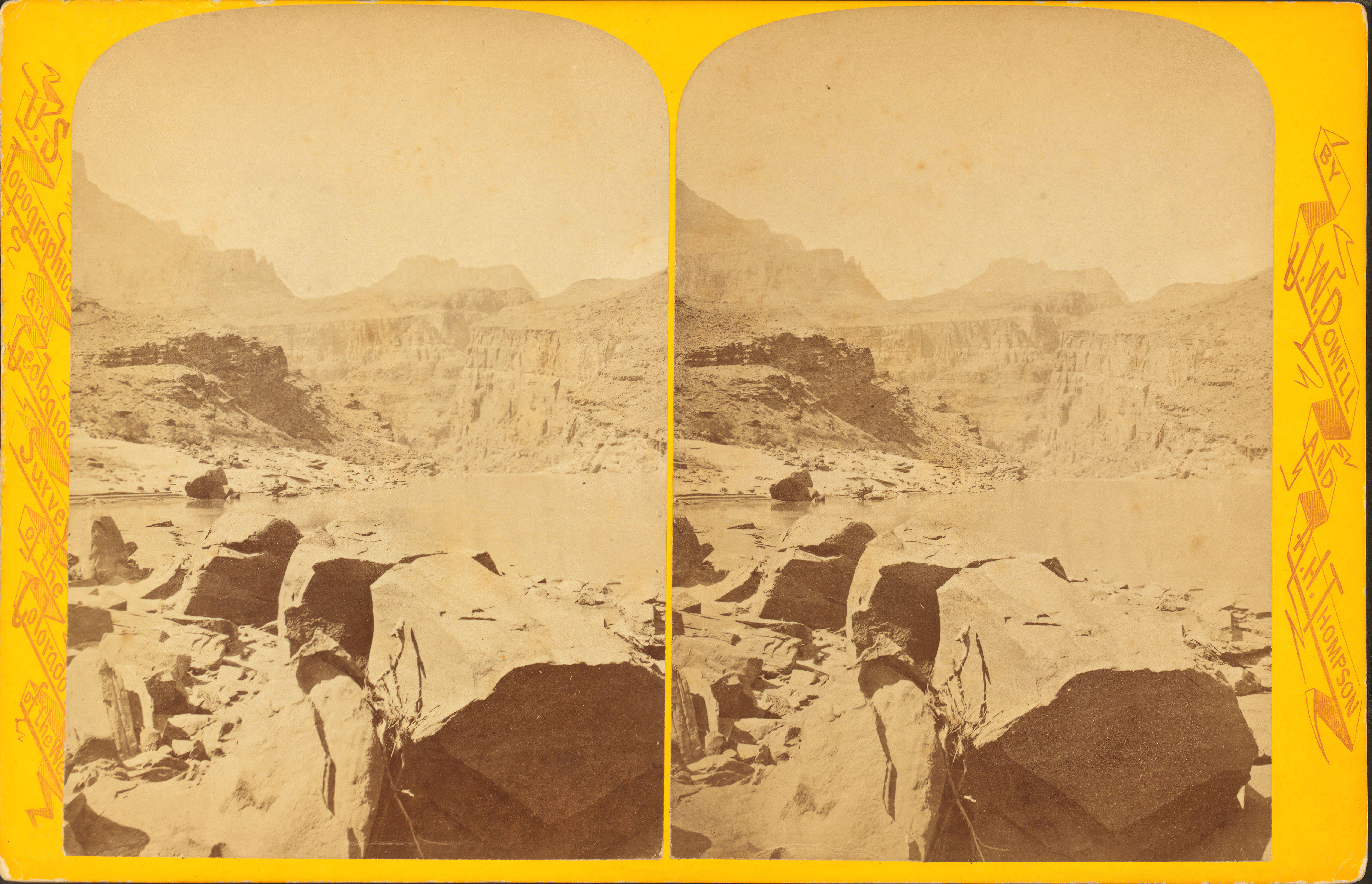
On May 24, 1869, ten men pushed four oak boats into the Green River at Green River, Wyoming and disappeared into the unknown.
ppTheir leader was John Wesley Powell — a one-armed Civil War veteran, self-taught geologist, and one of the most determined explorers in American history. Their goal: to travel nearly 1,000 miles of uncharted river through the canyon wilderness of the American West. No maps existed. No one who had attempted the route had returned to describe it.
What followed over the next three months was one of our favorite stories to tell of a great American expedition. It’s a story of hardship, wonder, and discovery that still echoes through every mile of river that runs through Moab today.
Powell's crew carried food for ten months and four wooden boats — three built from sturdy oak, one from pine. They were scientists and soldiers, hunters and risk-takers. What they weren't…was prepared for what the river had in store.
By the time the expedition reached the confluence of the Green and Colorado Rivers in present-day Canyonlands, the toll was already significant. One boat had been lost to the rapids. Rations were dangerously low. The men were fashioning new oars from driftwood, improvising their way forward mile by mile, canyon by canyon.
The river was not interested in being explored on anyone else's schedule.
The expedition's journals are some of the most gripping writing to come out of the American West — plain, direct, and alive with the particular exhaustion and wonder of men encountering something genuinely new.
On July 23, 1869, Powell wrote:
“On starting we come at once to difficult rapids and falls, that in many places are more abrupt than in any of the canyons through which we have passed, and we decide to name this Cataract Canyon.”
The name held. It's the same canyon that every Navtec guide knows and loves and ventures through today.
The days that followed tested the expedition to its limits. On July 24, Powell recorded:
“Large rocks have fallen from the walls — great angular blocks, which have rolled down the talus and are strewn along the channel. We make three portages in succession... We stop for the night only three fourths of a mile below the last camp. A very hard day's work has been done.”
Three portages in a single day. Three quarters of a mile gained. The rapids that stopped Powell's crew cold are the same hydraulics — Big Drop 1, 2, and 3 — that make Cataract Canyon one of the premier whitewater destinations in North America today.
Then, on July 27, a brief reprieve that reads like pure relief:
“Late in the afternoon we discover a flock of mountain sheep a hundred feet above us... Soon we hear firing. We lash our prizes to the deck... fresh meat is too tempting, and we stop to have a feast. And what a feast it is! Two young fine sheep! We care not for bread or beans or dried apple tonight; coffee and mutton are all we ask.”
Even 155 years later, there's something recognizable in that moment — the way the canyon demands everything, and then offers something extraordinary in return.
Six of the ten men completed the full river journey, reaching the mouth of the Virgin River on August 13, 1869. One had left the expedition earlier in Vernal, where he eventually settled and raised a family. Three others hiked out at Separation Canyon near the bottom of the Grand Canyon and were never heard from again. Their fate remains unknown.
Before that final stretch, Powell had captured the raw uncertainty of what they were facing in a single passage that still resonates:
"What falls there are, we know not; what rocks beset the channel, we know not; what walls rise over the river, we know not."
That sentence — written at the edge of something genuinely unmapped — is as good a description of real exploration as has ever been put to paper.
Powell did not see himself simply as an adventurer. He was a scientist, and his time on the Colorado River produced some of the foundational principles of American geology. His expedition was the first to document the true depth and scale of the canyon system.
His work led directly to the creation of the U.S. Geological Survey, which he later directed. He advocated for watershed-based land management in the arid West decades before the concept entered mainstream policy. In many ways, the way we understand and manage the Colorado River basin today begins with Powell's journals from the summer of 1869.
The canyon he named — Cataract — still runs exactly as he found it. Here at Navtec, he’s something of a hero. When you explore the land he helped defined, you’ll see why.
We weren’t the first to navigate Cataract Canyon—but the Navtec family has been connecting with these bends for generations. And the water hasn't changed. The walls haven't changed. The Big Drops are still the Big Drops. We bring the knowledge and the stories of this river — along with the geology, the history, the respect for what it demands.
If Powell's story has you curious about what that stretch of river actually feels like, we'd love to show you.